VR training · Lifetime licence €3,000 net
Energy Technician of the Future — VR training in energy and renewables in one application
Four modules on Meta Quest 3/3S headsets: wind turbines, photovoltaics and heat pumps, a complete home electrical installation with renewables, and DC and AC electric motors. The student designs, installs, diagnoses faults and sees the physics of energy live — using just their hands.
Meta Quest 3/3S · Standalone · Hand Tracking · Progress tracking and reports

Application Modules
All of renewable energy — from the turbine to the electric motor
Four thematic modules in one application — the student picks a module from the menu and works through interactive scenarios at their own pace.

Module A
Wind turbines
- Turbine structure: foundation, tower, nacelle, hub, blades, generator, gearbox
- Animated operating principle — converting wind energy into electricity
- Construction step by step: site, foundations, assembly from the crane cab, grid connection
- Maintenance: inspections, lubrication, parts replacement

Module B
Photovoltaics and heat pumps
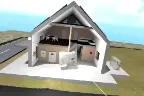
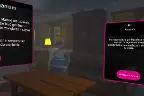
- Interactive model of a house on a table — everything visible from above
- Design: 3–30 kWp power slider, panel angle, shading simulation
- Installation on pitched and flat roofs, inverter, cabling
- Heat pumps: air-to-water, ground-source, water-to-water + hot water tank

Module C
Home with a renewable energy system
- Home electrical installation: distribution board, sockets, lighting, cable routes
- Renewables integration: PV panels, micro-turbine, energy storage with BMS, heat pump
- DC and AC side, hybrid inverter, bidirectional meter
- The home’s energy balance in real time

Module D
DC and AC electric motors
- DC motors: series, shunt, compound, BLDC
- AC motors: squirrel-cage and slip-ring induction, synchronous
- Virtual disassembly and assembly — every part with its name and function
- Visualisation of magnetic fields and torque, and diagnostics by measurement
Energy Technician of the Future VR — at a glance
- What it is: an educational VR application from EpicVR (a Polish VR/AR developer, since 2013) for learning renewable energy — 4 modules covering wind turbines, photovoltaics with heat pumps, a complete home electrical installation with renewables, and DC and AC electric motors.
- Who for: school and university students — technical and vocational schools (renewable energy equipment and systems technician, electrical technician), vocational training centres and technical universities.
- What the student practises: designing PV systems from 3 to 30 kWp (sizing, angle, shading), installing panels on pitched and flat roofs, connecting the inverter and energy storage, fault diagnostics (dirty panels, damaged cable, inverter failure, hotspot), and the construction and servicing of electric motors.
- Hardware: Meta Quest 3 or Quest 3S headset in standalone mode (no computer), operated mainly with hands (hand tracking).
- Operating mode: single-user — every student works at their own pace; the application tracks progress, assesses tasks and generates reports.
- Price: €3,000 net per station — lifetime licence, no subscriptions. In Poland, funding is available from the Cyfrowy Uczeń (Digital Student) programme, among others.
- Live physics: energy flow mode shows the path of current from the panel through the inverter and meter to the house; changing the angle or adding shade immediately changes output in watts.
Pricing
Four modules. One licence. For life.
All 4 modules for the price of one per-station licence — no subscriptions or annual fees.
Per-station licence
€3,000 net / station · lifetime
- All 4 modules: turbines, PV and heat pumps, home with renewables, motors
- Progress tracking, task assessment and reports
- Hand tracking control — no controllers to learn
- App updates included
VR lab package
Quote custom — licences + headsets + deployment
- Licences for multiple stations at a package price
- Meta Quest headsets with the application pre-installed
- Deployment, teacher training and teaching materials
- Can be combined with other EpicVR applications (e.g. Wind Turbine Service VR)
Cyfrowy Uczeń (Poland) — 2027 call
Grant PLN 15,000–100,000 depending on school size
- The application qualifies for Poland’s Cyfrowy Uczeń programme
- We help you put together the application and specification
- A Polish product supporting the core curriculum for renewable energy and electrical tracks
- Pilot — test before you buy
Per-station licence
€3,000 net / station · lifetime
- Onboarding PV fitters and renewables service technicians
- Diagnosing installation faults without travelling to the site
- Progress reports for training records
- Demos for customers — a renewable energy system on a model in VR
Multi-licence / training centre
Quote custom — multiple stations
- Package discounts for multiple stations
- Headsets with pre-installation and a transport case
- Training for in-house trainers
- Technical support during deployment
Customisation for your company
Quote custom — your equipment in VR
- Scenarios based on the equipment in your range
- Branding and reporting to meet company requirements
- Extension with further thematic modules
- 13 years of EpicVR experience in custom applications
Why VR
Designed for learning outcomes
A roof with 60 panels, an energy storage unit and the inside of a turbine nacelle — you cannot show that in a classroom. In VR the student has it all on the table in front of them.
Physics you can see
A coloured line shows the flow of current from the panel through the inverter and meter to the house. The student turns the panel, adds the shade of a tree — and immediately sees output in watts drop.
No risk and no heights
Working on a roof, at the distribution board and on a turbine — from the classroom. The installation scenarios include the safety rules for working at height, but without real danger.
The invisible becomes visible
Magnetic fields in a motor, current flow in the windings, torque — phenomena impossible to see in reality can be viewed in VR from every side.
Hand tracking
Moving the power slider, cleaning panels with a gesture, opening the inverter — all with your own hands, with no controllers to learn. Ideal for a first VR lesson.
Faults like in real life
Faults appear at random — one at a time or two at once. The student has to find the cause of the power drop themselves: dirt on the panels, a damaged cable, an inverter failure or a hotspot on a module.
Progress and reports
The application tracks the student’s progress, assesses completed tasks and generates reports — the teacher has hard data for grading and the student sees their progress.
See it in action
Renewable energy you can take in your hands
In the recording you will see, among other things:
- Designing a PV system with the power slider — every 0.5 kWp is one panel on the roof
- A model of a house with transparent walls and floating components
- Energy flow mode — the path of current from the panel to the socket
- Fault diagnostics: cleaning panels with a gesture and resetting the inverter
- Building a wind turbine — from the crane cab
For Education
A profession of the future needs a lab of the future
The renewables industry is growing faster than schools can equip their labs. One VR application replaces a practice roof, an inverter station, an energy storage unit and a motor cutaway.
Renewable energy and electrical tracks
Renewable energy equipment and systems technician, electrical technician, electromechanic — the modules cover photovoltaics, heat pumps, electrical installations and electrical machines in practical lessons.
Primary and secondary schools too
The modules also work as a demonstration in physics and technology lessons: where electricity from wind and sun comes from, and how a home manages energy. Career guidance gains a strong argument for renewable energy tracks.
Convenient for the teacher
A single-user application — every student works at their own pace at their own station, and progress and grade reports go to the teacher. We train instructors as part of the deployment.
Everything from one supplier
Application, headsets, deployment and training — on one invoice
We deliver ready-to-use stations: Meta Quest headsets with the application pre-installed, on-site or remote deployment, instructor training and teaching materials.
Turnkey deployment
Everyone in the institution knows what’s in it for them
What matters to management
An investment that is easy to justify
- Four thematic labs for the price of one licence — turbines, PV, installations, motors
- Lifetime licence — one expense, successive year groups included
- Eligible for funding (in Poland e.g. Cyfrowy Uczeń)
- Progress reports — hard data for evaluating teaching
- No cost of physical stations: a practice roof, an inverter, motor cutaways
Vocational teacher
Ready-made scenarios with step validation — no stations to prepare before the lesson.
School / university student
Installs, designs and diagnoses on their own — instead of looking at photos in a textbook.
Career adviser
Shows the renewable energy profession in practice — the best promotion of the track on open days.
Head of an installation company
Onboarding fitters and demos for customers — a renewable energy system on a model instead of on slides.
School IT administrator
Standalone on Meta Quest 3/3S — no computers, cables or network configuration.
School governing body
The school teaches professions of the future in a modern and safe way — one investment, many tracks.
Teaching method
Design → install → diagnose
Each subject area takes the student through the same cycle — from design decisions, through hands-on installation, to fault finding.
1. Design
- 3–30 kWp power slider — the number of panels grows before your eyes
- Panel angle and shading from a tree — output in watts, live
- Placing electrical points and cable routes in the house
2. Installation
- Panels on pitched and flat roof mounting structures
- Inverter, energy storage, DC and AC cabling
- Mini-foundation and mast of a home turbine, motor disassembly and assembly
3. Diagnostics
- Random PV faults: dirt, damaged cable, inverter failure, hotspot
- Inspection of cabling and connections, checking heat pump filters
- Motors: measurements with a multimeter, insulation tester and clamp meter, replacing brushes and bearings
Offer summary
How much does Energy Technician of the Future VR cost?
Education licence
€3,000 net / station · lifetime licence
All 4 modules for technical schools, vocational schools, vocational training centres and universities. In Poland it can be funded from the Cyfrowy Uczeń programme — we help with the paperwork.
Ask for a school offerWhat you can add in a package
- Meta Quest headsets with the application pre-installed
- Lab deployment and teacher training
- Teaching materials for instructors
- Transport case for a set of headsets
Business licence
€3,000 net / station · lifetime licence
For PV installation companies, renewable energy operators and training centres. Multi-licences and customisation for the equipment in your range — custom quote.
Ask for a B2B offerFor business in a package
- Headsets with pre-installation and device fleet configuration
- Training for in-house trainers
- Reporting for training records
- Combining with the Wind Turbine Service VR, VR safety and LOTO applications
What exactly does the €3,000 net licence cover?
The full Energy Technician of the Future VR application for one station (one headset): all 4 modules — wind turbines, photovoltaics and heat pumps, home with a renewable energy system, and DC and AC electric motors — along with progress tracking, task assessment and reports. The licence is for life, with no annual fees. Headsets, deployment and instructor training are quoted separately or as a package.
Can I test the application first?
Yes. Book a free online presentation or use the EpicVR test programme — we lend headsets with the application so that the teaching staff or the training department can check the product before making a purchase decision.
Free presentation
See Energy Technician of the Future in action before you decide
Leave your contact details — we will get back to you within 1 business day and arrange an online presentation or headset tests at your site.
- Live presentation with time for questions
- Package quote for your number of stations and grant
- Help with choosing headsets and putting the lab together
- No obligation — you check first, then decide
See also
Related deployments — energy and technical education
Energy Technician of the Future is a catalogue product; below are EpicVR projects for the energy sector and technical training.
PGE — online shop in AR
Challenge: Show customers products from the energy shop in their own home.
Solution: An AR application with a library of 3D models placed in the real environment.
Result: Deployment results are available on request — the data is held by the client.
Toyota — operating the TNGA 1.5 casting machine
Challenge: Prepare future employees to operate the machine before they reach the workstation.
Solution: VR training with the operating procedures of a cylinder head casting machine in a virtual copy of the workstation.
Result: Deployment results are available on request — the data is held by the client.
Colgate-Palmolive — pump assembly
Challenge: An error-free pump assembly and disassembly sequence for new employees.
Solution: VR training that checks the order of every step.
Result: VR training since 2021.
Your deployment could be next
We will show the app online in 30 minutes, calculate the cost for your number of stations and propose a pilot.
FAQ
Frequently asked questions
How much does the Energy Technician of the Future VR application cost?
A lifetime licence costs €3,000 net per station (one headset) and covers all 4 modules. No subscriptions or annual fees. Meta Quest headsets with pre-installation, deployment and instructor training are quoted separately or as a package — for multiple stations we prepare a custom quote.
Which modules does the application include?
Four: Module A — structure, operating principle and maintenance of wind turbines; Module B — design, installation and maintenance of photovoltaic systems and heat pumps; Module C — a complete electrical installation of a single-family house with renewables integration (panels, micro-turbine, energy storage, heat pump); Module D — structure, operation and diagnostics of direct current (DC) and alternating current (AC) motors.
Which headsets does the application run on? Is a computer needed?
The application runs in standalone mode on Meta Quest 3 and Quest 3S headsets — with no connection to a computer. It is operated mainly with hands (hand tracking); controllers are also supported.
Is the application multi-user?
No — it is a single-user application. Every student works at their own station at their own pace, and the application tracks their progress, assesses tasks and generates reports for the instructor. For team training with an instructor we recommend the Wind Turbine Service VR application.
What does learning photovoltaics in Module B look like?
The student works on an interactive model of a house placed on a table. They design the system with a power slider from 3 to 30 kWp (every 0.5 kWp is one panel), set the panel angle and check the effect of shading — energy output in watts changes live. Then they install the panels on a pitched or flat roof structure, connect the inverter and cabling, and finally diagnose faults.
Which faults does the student diagnose?
In the photovoltaics module faults appear at random, one at a time or two at once: dirty panels (cleaning with a gesture restores power), a damaged cable or loose connection (cabling inspection), an inverter failure (checking fuses and a reset) and a damaged PV module — a hotspot that requires replacing the panel. The motors module adds measurements with a multimeter, insulation tester and clamp meter, and replacement of brushes and bearings.
What does the electric motors module show?
Realistic 3D models of DC motors (series, shunt, compound, BLDC) and AC motors (squirrel-cage and slip-ring induction, synchronous). The student takes a motor apart and puts it back together, learning the name and function of every part, while visualisations show magnetic fields, current flow in the windings and how torque is produced — phenomena invisible in reality.
What does the home with a renewable energy system module teach?
Designing and building a complete installation: placing sockets, lighting and cable routes, installing the distribution board, PV panels on the roof, a micro-turbine with its foundation, energy storage and a heat pump, and above all integrating all systems on the DC and AC side — with a hybrid inverter and a bidirectional meter. The home’s energy balance (production, consumption, storage, export to the grid) is visible in real time.
Which schools and tracks is this application for?
For technical and vocational schools on the renewable energy equipment and systems technician and electrical technician tracks, for vocational training centres and technical universities. The modules also work well as demonstrations in physics and technology lessons and in career guidance. On the business side — onboarding PV fitters and demos for installation companies’ customers.
Can a school afford such a lab? Where does the funding come from?
In Poland the application qualifies for the Cyfrowy Uczeń programme (grants of PLN 15,000–100,000 depending on school size) and other education digitalisation programmes. We help prepare the specification for the application. The licence is for life, so one grant funds the lab for years.
What does deployment look like and how long does it take?
We deliver headsets with the application pre-installed, carry out the deployment (on site or remotely) and train the instructors. If you already have your own Meta Quest 3 or 3S headsets, we activate the licence remotely. As a rule, the whole process takes a few business days from the order.
Can I see the application before buying?
Yes — book a free presentation using the form on this page. You will see the application live, ask questions and agree a quote for your institution. Headset tests are also possible under the EpicVR test programme.
Isn’t VR a gadget that employees will play with for a week?
We treat VR as a training tool, not an attraction: according to PwC (2020), learning practical procedures in VR is up to 4× faster than in a lecture, and the scenarios enforce the correct order of actions. In the reports you see every employee’s results, errors and progress — the wow effect is just a bonus that raises training attendance.
What about servicing — what if a headset gets damaged?
Meta Quest headsets are off-the-shelf hardware available immediately — replacing a damaged unit costs a fraction of repairing a classic simulator. The licence is tied to an account: you log in on a new device and carry on training. We provide technical support and replaceable hygiene covers.
What about the app in 5 years — will it still be supported?
EpicVR is a Polish joint-stock company operating since 2013, with more than 100 deployments for companies such as KGHM, JSW and ArcelorMittal. A perpetual licence works offline and remains the company’s property indefinitely — unlike SaaS models, where the training disappears together with the subscription.
Licence and terms of use
EpicVR apps are provided under a licence agreement. The key rules before you order:
- One licence = one Meta account. The key activates the app on one account and cannot be moved to another.
- Delivery through the Meta Horizon Store — from our private release channel. You give us the e-mail address of the Meta account and we grant access to the app.
- The Meta account must be a standard account for an adult (18+). Accounts marked as child accounts do not support private distribution channels — this is a Meta platform rule. In a school, the app is activated by a teacher or an administrator.
- Hardware: Meta Quest 3 or 3S headsets in standalone mode, with no computer or cables.
- Term: a fixed-term licence (subscription) or a perpetual one — as ordered.
- Updates during the licence term are included and download from the Meta Horizon Store.
Download the licence agreement (PDF, Polish)
Version of 17 September 2026. The document covers all EpicVR training apps. The agreement is governed by Polish law; in case of discrepancies between the Polish and English versions, the Polish version prevails. Purchasing, activating or using the software means acceptance of the agreement.
Formal information
Training status and professional qualifications (SEP, UDT, installer certificates)
The Energy Technician of the Future VR application is an educational tool. It supplements vocational education and courses required by law — it does not replace them and does not grant qualifications. Electrical licences (SEP in Poland), renewable energy installer certificates (UDT in Poland) and health and safety training are issued solely by authorised centres and boards. VR lets students practise procedures safely and understand how equipment works before taking such courses and exams.
Licence and technical requirements
The lifetime licence is assigned to a station (one headset). Required headset: Meta Quest 3 or Quest 3S (standalone mode, no computer). The application supports hand tracking and controllers and is single-user. Scenario content reproduces typical industry equipment and procedures in a teaching form; the developer reserves the right to simplify interaction mechanics compared with real manual tasks.
Energy technician of the future and VR training in renewables — questions and answers
Short answers about the energy technician profession, renewable energy sources and learning in virtual reality.
What does a renewable energy equipment and systems technician do?
A renewable energy equipment and systems technician designs, installs, commissions and services renewable energy systems: photovoltaics, heat pumps, wind turbines and energy storage. It is one of the fastest-growing technical professions in Poland — it is taught in technical and vocational schools, and graduates find work with PV installers, wind farm operators and in the power industry.
What is the Energy Technician of the Future VR application from EpicVR?
It is an educational VR application for Meta Quest 3/3S headsets that teaches renewable energy in four modules: wind turbines, photovoltaics and heat pumps, a complete home electrical installation with renewables, and DC and AC electric motors. The student designs, installs and diagnoses faults using just their hands (hand tracking). It is developed by EpicVR, a Polish VR/AR studio operating since 2013.
How much does VR training in energy and renewables cost?
A lifetime licence for the Energy Technician of the Future VR application costs €3,000 net per station and covers all 4 modules along with progress tracking and reports. Headsets and deployment are quoted separately; schools in Poland can fund the purchase from the Cyfrowy Uczeń programme, among others.
Can you learn photovoltaic installation in VR?
Yes — as far as procedures and principles are concerned. The student designs a system from 3 to 30 kWp (sizing, panel angle, effect of shading), installs panels on pitched and flat roof structures, connects the inverter and cabling, and then diagnoses typical faults: dirty panels, a damaged cable, an inverter failure and a hotspot. Energy output in watts is visible live with every change.
Does VR training replace SEP licences or a renewable energy installer certificate?
No. The application supplements vocational education, but it does not grant qualifications. SEP electrical licences and renewable energy installer certificates issued by UDT (Poland) can be obtained only at authorised centres and before examination boards. VR is for practising procedures safely and understanding the equipment before such exams.
How does the application show how a renewable energy system works?
With energy flow mode: a coloured line leads from a ray of sunlight through the panel, inverter and meter all the way to the house, and the energy balance (production, consumption, storage, export to the grid) changes in real time. The motors module visualises magnetic fields, current flow in the windings and torque.
Which headsets does the application run on?
On Meta Quest 3 and Meta Quest 3S headsets in standalone mode — with no computer, cables or extra infrastructure. It is operated mainly with hands thanks to hand tracking; controllers are also supported.
How does Energy Technician of the Future differ from the Wind Turbine Service VR application?
Energy Technician of the Future is a broad educational application — four areas of renewable energy in single-user mode, ideal for learning the basics of the profession. Wind Turbine Service VR is advanced training in the full turbine service procedure (safety, LOTO, measurements, component replacement) with multiplayer for up to 4 trainees and an instructor panel. The two applications complement each other in a renewable energy lab.